
Can We Bring Back a T. rex?
Dire wolves are back. Woolly mammoths may be next. Have we really entered the age of de-extinction?

Picture the scene: scientists in white lab coats anxiously hover over an incubator. In it, the shell of a large egg begins to crack. Piece by piece, the fragments break off until out of it emerges a lizard-like creature with large eyes and tiny arms: the first dinosaur born in 65 million years.
Of course, you probably don’t need to work too hard to imagine this if, like me, you’ve had the scene ingrained in your mind since you first watched Jurassic Park.
In Steven Spielberg’s classic adaptation of Michael Crichton’s 1990 book, the science felt almost plausible enough to leave us wondering if, just maybe, this could actually happen one day.
That exciting future might now be closer than you think.
Last April, a US biotech firm triumphantly declared that “for the first time in human history” it had “successfully restored a once-eradicated species through the science of de-extinction.”
More than 10,000 years after the disappearance of the last dire wolf, Colossal Biosciences had brought the species back from the dead. Or so they claimed.
So, what’s really going on? Have we actually entered a brave new post-extinction age? Will we soon be sharing the planet with species we’ve long thought confined to history?
In this five-minute explainer video, I explore the incredible science of de-extinction. After that, I’ll get to the question you’re now inevitably pondering – when are the dinosaurs coming back? And, more importantly, if we can now resurrect long-defunct species… should we?
The dire wolf de-extinction breakthrough
Dire wolves roamed the Americas for hundreds of thousands of years. These apex predators were larger than today’s grey wolves, with bigger teeth, stronger jaws and thick white fur.1 Then, sometime around 12,500 years ago, as the Earth’s climate warmed and the large herbivores they fed on became scarce, the last dire wolf died and the species was no more.
Since then, they’ve existed only in the realm of fantasy, gaining a near mythical status through games like Dungeons and Dragons and World of Warcraft, and their starring role in Game of Thrones.
That is, until October 1st, 2024.
On this date, in a secretly located ecological preserve somewhere in the US, a dire wolf set foot on land for the first time since the end of the last Ice Age.
Six months later, Colossal revealed the news in a blitz of publicity: it had genetically engineered the birth of three pups: two males, Romulus and Remus, and a female named Khaleesi.
When the history books come to be written, it might even trump the Oasis reunion as the decade’s most unlikely comeback! And Colossal isn’t stopping there. Last month, it announced the addition of the bluebuck antelope to the list of species it is working to de-extinct. It’s also engineering the return of the woolly mammoth, dodo, thylacine and moa – a large flightless bird native to New Zealand 500 years ago.
Colossal bills itself as “the world’s first de-extinction company”, but others have joined the field too. Revive & Restore is trying to return the passenger pigeon to our skies for the first time in a hundred years.
Will dinosaurs be next? A Jurassic Park fact check
In Jurassic Park, scientists extract dinosaur DNA from the blood of mosquitoes fossilised in amber. But the genetic code is incomplete, with entire sections missing from the ancient genome. To bring the creatures back to life, the fictional John Hammond and his team fill these gaps using DNA from other creatures – notably frogs – before creating the world’s first cloned dinosaurs.
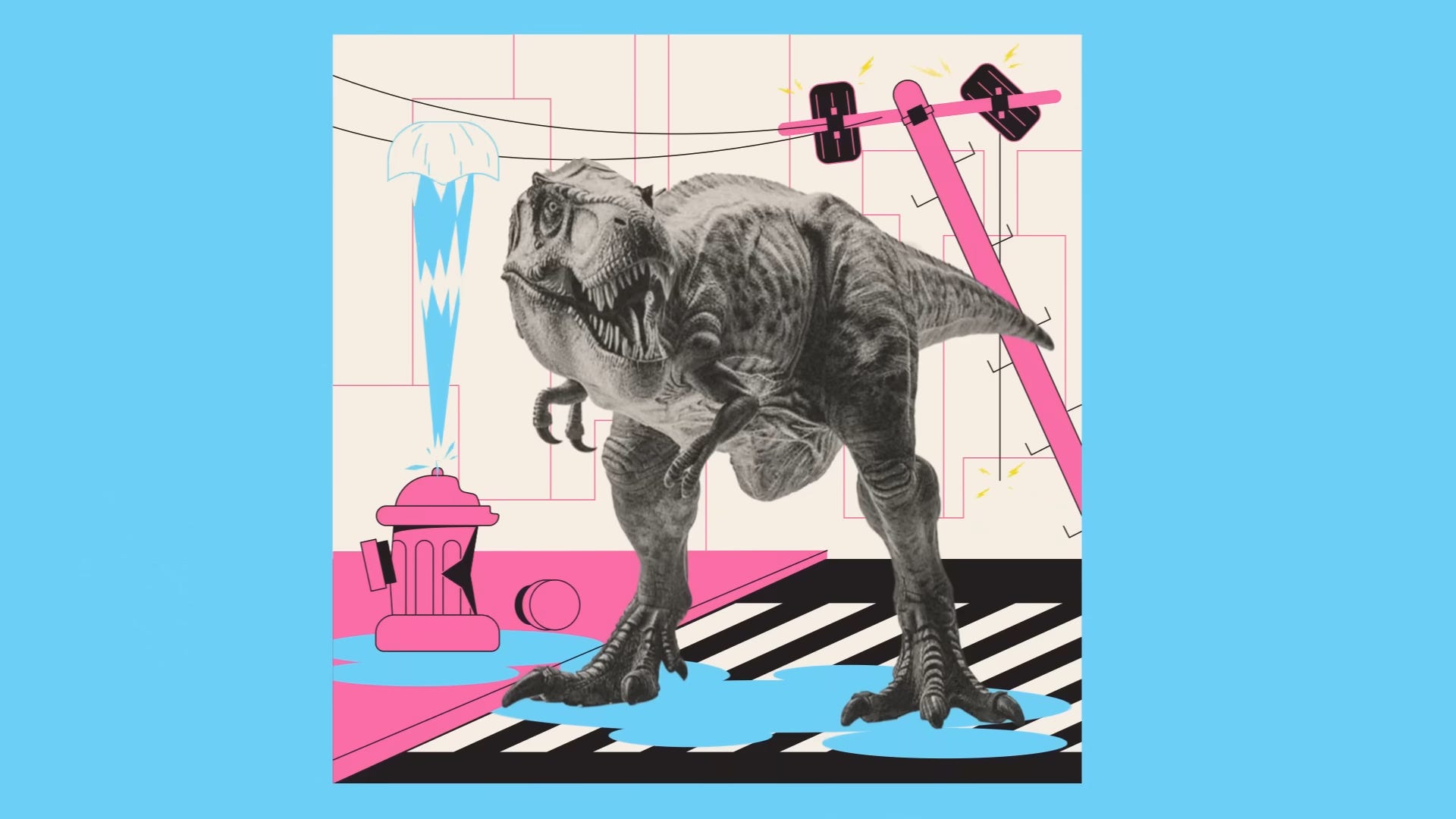
Colossal also used a mix of gene editing and cloning, but with a crucial difference (more on that shortly).
So, to de-extinct a dinosaur, we’re going to need to get our hands on some dino DNA. Unfortunately, that’s probably impossible.
DNA is incredibly fragile and breaks down over time. It has been recovered from a one-million-year-old mammoth fossil, but experts seem to agree that this very degraded sample was pushing the limit of how far back any genetic material could survive.
Renowned palaeontologist Jack Horner was the inspiration for Jurassic Park’s Dr Alan Grant. After a lifetime of searching for dinosaur DNA, he’s come to a disappointing conclusion. 65 million years on from their extinction, no genetic remnants remain: “Dinosaur DNA – all DNA – just breaks down too fast.”
Horner was a consultant on the Spielberg adaptation. But (spoiler alert) he says the fossilised mosquito breakthrough, memorably explained in the film’s Mr DNA sequence, isn’t scientifically plausible:
“I assume everybody knows that if you actually had a piece of amber and it had an insect in it, and you drilled into it, and you got something out of that insect, and you cloned it, and you did it over and over again… you’d have a room full of mosquitoes. And probably a whole bunch of trees as well.”
However, Horner hasn’t given up on his lifelong ambition of bringing back a dinosaur. Could life find another way?
Enter the dino-chicken
Colossal achieved its de-extinction breakthrough by doing things a little differently. Instead of patching up the old DNA with some from a living species, they started off with a living species and tweaked that DNA to resemble the old one.
They began with grey wolf cells, and edited sections of their genetic code to clone embryos that would develop dire wolf traits.
Of course, we don’t really have animals around today that bear a passing resemblance to a T. rex. But we are still surrounded by dinosaurs that survived the mass extinction: birds.
Two-legged carnivorous beasts like the T. rex and Velociraptor were part of a group known as theropods, from which today’s feathered friends evolved. In fact, palaeontologists now think that Velociraptors were covered in feathers.
All modern birds evolved from a theropod now affectionately known as the “wonderchicken”. So, to apply Colossal’s breakthrough method to dinosaur resurrections, we could start with… a chicken.
Just over a decade ago, Jack Horner announced an eccentric plan to do exactly that. He wants to genetically modify a chicken to ‘reactivate’ some of the features that modern-day breeds have shed through evolution – like teeth, a tail and small hands instead of wings.
More than ten years later, updates on the dino-chicken project are few and far between. But, as of last year, Horner confirmed he was still trying to create a genetically modified pet dinosaur.
The limits of de-extinction
Let’s be honest. If someone promised you a T. rex and unveiled a bizarre-looking mutant dino-chicken instead, you’d feel a little cheated.
The creation of a genetically modified freak chicken – an impressive, if questionable, feat of scientific ingenuity – is clearly not the same thing as resurrecting a terrifying 10-tonne beast from the Late Cretaceous period.
This distinction between producing something new and reviving something old isn’t confined to the hypothetical dino-chicken. Take those dire wolf pups. They weren’t quite what the sensational headlines and Colossal’s publicity materials initially claimed.
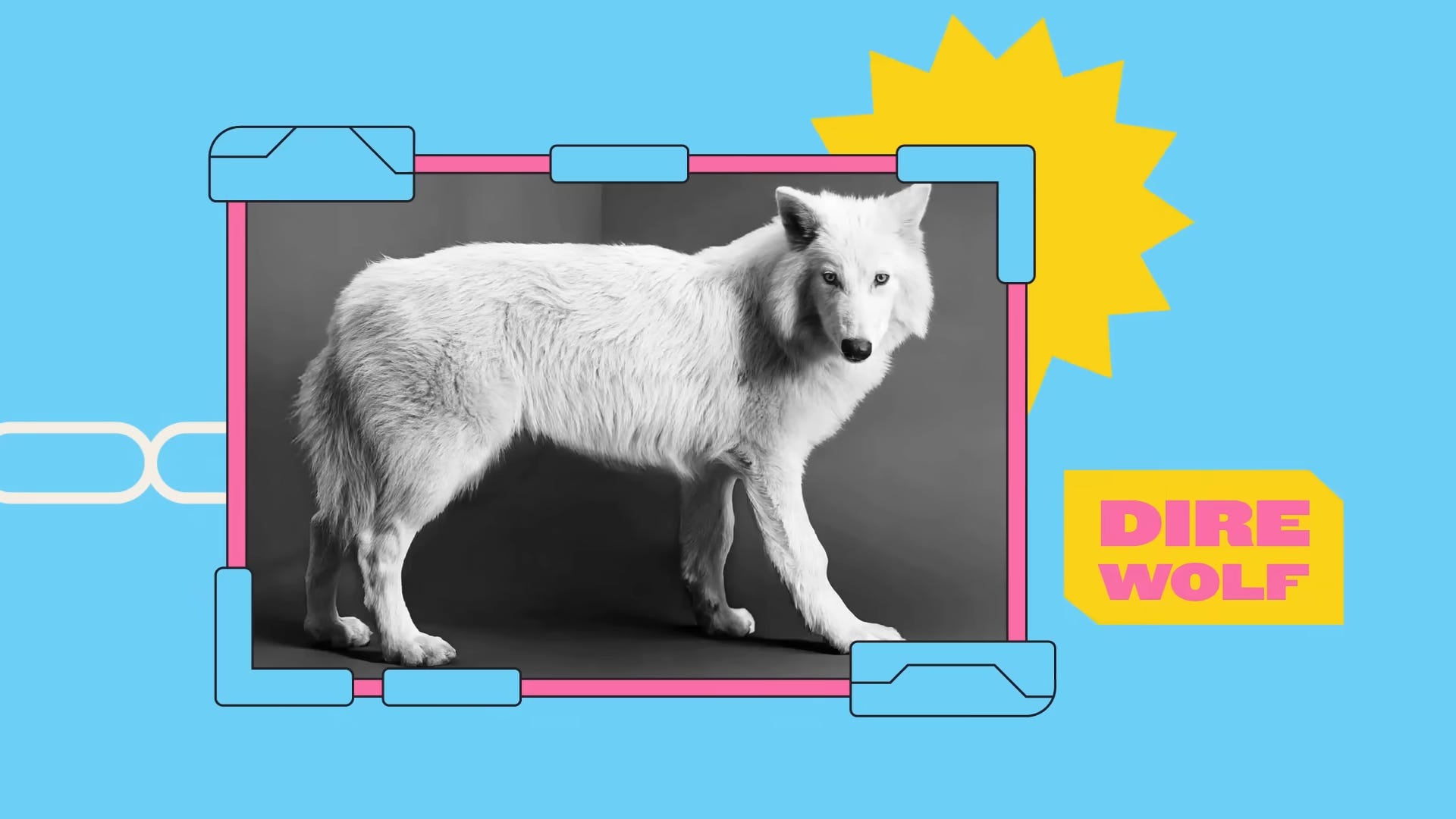
As a more sceptical New Scientist article summarised:
“What Colossal did was make 20 small changes to the genome of grey wolf (Canis lupus) cells, only 15 of which were based on the genome of dire wolves, and then cloned the altered cells to produce three wolf pups.”
To put those changes into perspective, there are an estimated 12.5 million differences between the genomes of grey wolves and dire wolves. And there isn’t even a consensus on whether they were all that closely related.
Conservationists were clear: “The three animals produced by Colossal are not dire wolves. Nor are they proxies of the dire wolf.”
Colossal’s chief scientist Beth Shapiro later added some nuance to the company’s initial sensational claim:
“It’s not possible to bring something back that is identical to a species that used to be alive. Our animals are grey wolves with 20 edits that are cloned.”
Genomically speaking, Colossal’s pups aren’t dire wolves. They’re grey wolves bred to look like them. But even this isn’t straightforward. It’s been so long since the last dire wolf walked the Earth that we don’t have a consensus on how they looked. Oxford University’s Professor Claudio Sillero, for instance, believes these long-extinct lupines may have had red coats, not the striking white ones we’ve seen in Westeros.
So Colossal’s miracle pups are actually grey wolves, genetically engineered to appear a bit like how some people think dire wolves may have looked. You can see why they didn’t put that in the press release!
Even if, by some miracle, we did one day manage to recover the complete, undamaged set of genetic instructions for a T. rex – or any other extinct species – the creatures engineered through cloning still wouldn’t be perfect recreations.
A living animal is more than its DNA. We’re all shaped by our interaction with other living things and the time and place we live in. Genes don’t operate in isolation either. Environmental influences can change how they’re expressed and these epigenetic changes can even be passed on through generations.
The bottom line is, a baby dinosaur genetically engineered into existence in a high-tech 21st-century lab would be a very different beast from the giant apex predator that terrorised the planet tens of millions of years ago.
“Your scientists were so preoccupied with whether or not they could…”
So, if animals being created under the banner of “de-extinction” will never be a true match for the species we’ve lost, why are we doing this?
With ancient giants like the woolly mammoth, it’s at least partly just because it would be cool to see them – an understandable motive, but not necessarily a good one.
Another driver seems to be guilt. In cases like the passenger pigeon, human actions led to its demise, so bringing it back feels like righting a wrong. The death of the dodo marked a turning point in our understanding that human activity could drive a species to extinction. Colossal describes it as “a glaring example of the price of carelessness” and says that it intends to work with the government of Mauritius “to establish a foundation for the de-extinction and rewilding of the beloved bird we all dearly miss.”
Given that the last confirmed sighting of a dodo was in 1662, it’s a stretch to claim that “we all dearly miss” them. But it gives an insight into the motivations behind these eye-catching projects. Is it a good motive to want to grieve a modern proxy into existence? Would a 21st-century dodo fare any better than their predecessors did following the fateful arrival of Dutch sailors five centuries ago?
Critics argue that the headline-grabbing feats of companies like Colossal risk diverting attention and resources away from efforts to save the thousands of endangered species that aren’t extinct but – without urgent intervention – soon might be.
Life finds a way
But here’s a more optimistic scenario. The incredible scientific advances and techniques behind the dire wolf project might actually be key to helping us keep critically endangered species from going extinct in the first place.
Colossal says this has always been part of the plan. For every long-lost species it hopes to “de-extinct”, there’s another endangered species it is working to protect.
The gene-editing tools being developed to revive the dodo will also be used to restore genetic diversity to the pink pigeon. This rare bird native to Mauritius is a globally celebrated conservation success story. In the early 1990s, they numbered fewer than 10. Today, there are hundreds. But it turns out this is only a temporary reprieve. With conservationists starting from such a small gene pool, inbreeding is predicted to lead to extinction within the next century.
This fate could be averted using innovations pioneered in the name of de-extinction.
As part of its woolly mammoth project, Colossal is developing gene-editing techniques which will help protect endangered Asian elephants from the potentially fatal herpesvirus.
And the cloning methods that brought those “dire wolves” into existence have also been used to produce four red wolves – a critically endangered species native to the US, where fewer than 20 wild animals remain.
Science writer Helen Pilcher believes this could mark the most significant and meaningful impact of de-extinction:
“If the animals are allowed to breed when they are older, this could improve the genetic diversity and resilience of the red wolf population.
“This is a potentially valuable contribution to conservation science, but it’s a shame that this is being drowned out by the noise created by the dubious dire wolves.”
The end of extinction?
By some estimates, one million species of the world’s plants and animals are currently under threat of extinction. And according to the World Wildlife Fund, wildlife population sizes have fallen by 73% in just 50 years.
Advances in genetic engineering, driven by the audacious ambition to resurrect long-gone species, could be what helps thousands of today’s species avoid the same fate.
Coming face-to-face with a living creature that resembles a T. rex would undoubtedly be mind-blowingly impressive. But deep down, we’d know it wasn’t the real thing.
In the underwhelming sequels to the original Jurassic Park film, scientists move on from the pretence that they’re bringing old dinosaurs back from extinction. Instead, they genetically engineer ever-bigger and scarier new monsters to keep the public interested. Ironically, it’s probably a more apt illustration of what “de-extinction” actually is. If we ever succeed in “bringing back” something that we call a dinosaur, it won’t be the return of something very old, but the creation of something very new.
But if the same technology could potentially help save the planet from a sixth mass extinction event, and stop today’s critically endangered species from dying out? That really would be a breakthrough worth the hype.
Recommended links and further reading
Grieving the passenger pigeon into existence again (The MIT Press Reader)
Resurrecting the dodo: Science’s bizarre plan to bring back extinct bird, explained (BBC Science Focus Magazine)
Colossal scientist now admits they haven’t really made dire wolves (New Scientist)
Have researchers really ‘de-extincted’ the dire wolf? No, but behind the hype was a genuine breakthrough (The Guardian)
Extinction is forever: de-extinction can’t save what we had (Aeon Ideas)
In other news
In the past couple of weeks, NASA has awarded contracts for the first stages of its plan to build a lunar base. Two companies — Astrolab and Lunar Outpost — have been commissioned to build 1-tonne rovers that will be ready for moon missions by 2028. Here’s the iluli explainer on NASA’s Artemis program.
NASA has also released some incredible images following the successful completion of the Artemis II mission.
NVIDIA’s next AI system will be named after the pioneering astronomer Vera Rubin. Want to know more about how Rubin discovered dark matter and reshaped our understanding of the universe? Watch the iluli explainer here.
At least, according to some (including Colossal).